


There is an enormous range of quality in the herbal world. Many of the herbs sold online from loose leaf, formulated into supplements, grocery store tea bags, tinctures, gummies, and medicines have three common problems.
1. The herbs are old
Herbs from large retailers may already be several years old by the time they reach you.
As herbs sit in warehouses, travel through multiple distributors, and wait on store shelves many of the medicinal compounds that make the plant so valuable begin to degrade and medicineless.
2. The sourcing is unclear
Many commercial herbs are imported from India, Morocco, China, and other parts of the world. There is nothing inherently wrong with an imported herb, and many beautiful medicinal plants are grown outside the United States.
The problem is that we are rarely given any information about how the plants were grown, harvested, dried, stored, and transported.
Were pesticides or herbicides used? What does the organic certification require in that particular region? Was the soil healthy or were the plants grown next to industry? Was the plant harvested at the correct stage? How was it dried? Was it exposed to excess moisture or mold? What kind of water was used? Was it tested for heavy metals, microbial contamination, pesticides, adulteration, or mistaken plant identity?
I don’t know about you, but when I’m preparing an herbal remedy, yes, I want clean, quality herbs!
3. The herbs may have been heavily treated
Something else most people do not realize is that commercial herbs and spices may undergo intensive treatments before they reach you.
Because mass produced dried plant material can carry insects, mold, bacteria, and other contaminants, large suppliers may use treatments designed to sterilize the herbs, extend their shelf life, and make them easier to sell in enormous quantities. This also goes for your cooking spices.
These toxic treatments may include:
Ionizing radiation: Herbs and spices may be exposed to gamma rays, X-rays, or electron beams to reduce bacteria, mold, and insects. The FDA permits irradiation of dried herbs, spices, and seasonings. Irradiation does not make the herbs radioactive, but it is still a processing method many consumers would want disclosed, especially when choosing plants for medicinal use.
Ethylene oxide fumigation: Ethylene oxide is a sterilizing gas used to reduce pathogens such as Salmonella and E. coli in dried herbs and spices. The EPA estimated that approximately 32 percent of dried herbs and spices, domestic and international were gassed with ethylene oxide. Ethylene oxide is also classified as a hazardous air pollutant and a known human carcinogen.
Propylene oxide fumigation: Some spices and dried herbs may be treated with propylene oxide as another method of controlling bacteria, mold, and insects.
Steam sterilization or high-heat treatment: Steam can reduce microbial contamination without chemical fumigation, but strong heat may kill the herbs medicinal properties, especially when the plant contains delicate volatile oils.
Thanks to mass production we now get toxic treatments served alongside our herbs. And contamination fair concern, I get it from a “we need to make sure these herbs are safe perspective” but also fumigation doesn’t feel safe either.
The good news is USDA-certified organic (and most other organic certifications) herbs and spices cannot be treated using ionizing radiation, ethylene oxide or propylene oxide fumigation, but an organic label still does not tell you the herb’s age, how carefully it was dried, whether heat or another permitted treatment was used, or how many years it spent moving through the supply chain.
I do not expect herbs to be completely untouched. Cleaning, careful drying, responsible handling, and microbial testing are important parts of producing safe herbal products. But I 100% want to know what the plant(s) was treated with before I purchase it.
That level of transparency is much easier to find when buying directly from small farms that grow, harvest, dry, and package their own herbs on their own land.
Organic Does Not Always Mean Responsibly Sourced
Growing demand for herbal medicine places real pressure on wild plant populations, farming communities, and entire ecosystems. Our purchasing choices can either contribute to that destruction or help create a healthier, more sustainable herbal system.
You Can See and Smell the Difference
Freshly harvested & dried herbs are something completely different.
When an herb is harvested at the right stage, dried with care, and stored properly, it retains its beautiful color, characteristic aroma, flavor and medicine.
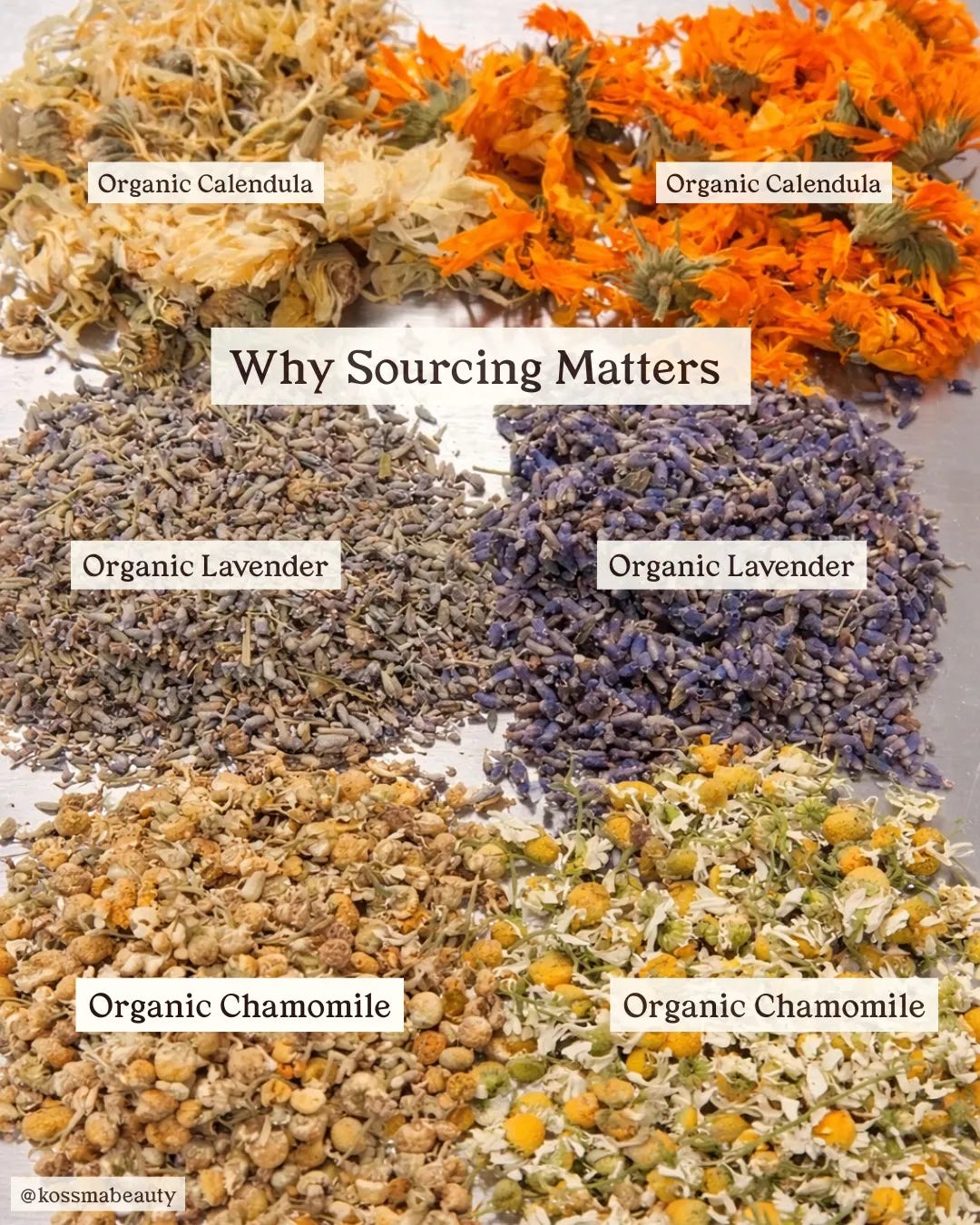
I took this comparison photo a few years ago. The herbs on the left came from mainstream herbal suppliers. The herbs on the right came from small farms like the ones I’m sharing with you today.
Both were labeled organic.
Yet one side was dead, crumbly, and scentless. The other was vibrant, aromatic, and still looked alive.
When you open a bag of well-grown nettle, you should smell nettle. Calendula should still be golden and smell earthly. Lemon balm should carry its bright, lemony aroma. Chamomile should smell sweet and apple-like. The quality is obvious.
Regenerative, organic, and conventional growing methods
Regenerative farms work to rebuild healthy soil, protect water quality, increase biodiversity, and create habitat for pollinators and wildlife. Practices may include crop rotation, cover crops, composting, reduced tillage, and keeping living roots in the soil. Over time, these practices create healthier land and ecosystems that can continue renewing themselves year after year.
Certified organic farming follows regulated standards that prohibit GMOs, sewage sludge, and certain pesticides, herbicides, and fertilizers. However, organic does not automatically mean regenerative. What I call organic-conventional farming is certified organic agriculture that still follows a large-scale industrial model, sometimes relying on monocropping, frequent tillage, and approved organic sprays and fertilizers without actively rebuilding the entire ecosystem.
Conventional farming allows a much broader use of synthetic pesticides, herbicides, and fertilizers. For medicinal herbs, my preference is always organic and regenerative whenever possible: herbs grown without prohibited chemicals while actively restoring the soil and protecting the life surrounding it.
Why I Love Buying Directly From Small Regenerative Herb Farms
Purchasing herbs from local and regional farms is one of the best ways to support a more sustainable herbal practice.You are often getting a fresher herb with far more medicine. You are also supporting the people doing the real work of caring for the soil, plants, pollinators, and surrounding ecosystem.
Small herb shops frequently sell out and/or only offer their herbs seasonally since each offering is freshly harvested. If you visit one of the websites below and the herb you want is unavailable, check back during typical seasonal harvest times.
Their inventory follows the seasons because they are selling what the land produced that year. This is a slower world than mainstream herbal commerce, and in my experience, the herbs are far more beautiful and potent.
Beginning With Restorative Herbs
Once you have access to good herbs, they can become part of your daily routines.
You can prepare simple teas, tinctures, herbal oils, baths, compresses, and long-brewed nourishing infusions. Herbs do not have to be reserved for moments when something feels wrong. Many can be used regularly to nourish and gently support the body over time.
Restorative herbalism focuses on rebuilding and strengthening the body over time. These herbs are different from acute remedies because the goal is not to immediately cure a symptom. The goal is long-term nourishment, balance, and resilience, just like eating a healthy diet, getting sunlight on your skin and exercising.
Because so many of us are living with chronic stress, we often need consistent support. Many restorative herbs work slowly and steadily and are most useful when they become part of a regular rhythm.
A few herbs you might begin using include:
Nettle
Milky oats
Lemon balm
Chamomile
Alfalfa
Dandelion root