


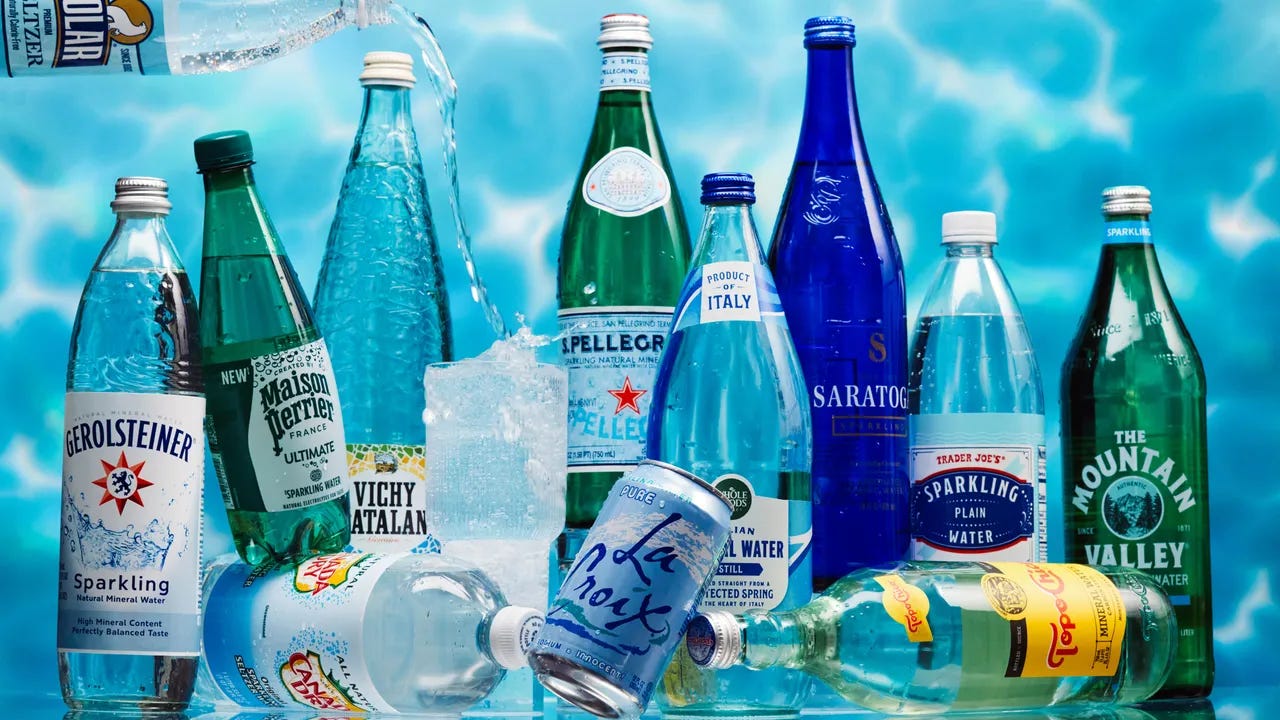
The Mineral Nobody Talks About
You probably already drink mineral water. Maybe you switched to it because you don’t trust tap water anymore, or you’re trying to stay more hydrated, or you just like how it tastes. And you probably know it has calcium and magnesium in it. But there’s something else in certain mineral waters that nobody is talking about, and when I tell you what it does in the body, you’re going to want to go check the label on whatever you’re drinking right now.
Bicarbonate. That’s it. That’s the mineral.
You already know it. It’s baking soda. Sodium bicarbonate. People have been using it forever, for digestion, acid reflux, heartburn. Your grandmother probably had a box of it in her cabinet for everything. But what most people don’t realize is that you can get it naturally, already dissolved in water, from certain springs. And when it comes from a spring, it’s not coming alone. It brings sodium, calcium, magnesium, trace minerals that work alongside it in ways that mixing baking soda into a glass of water just can’t replicate. The whole mineral profile is different. The cofactors are there.
The way it gets into the water is actually really interesting. When water moves through certain types of rock underground, limestone, volcanic rock, it picks up whatever minerals are in that geology. Some springs come out high in calcium. Some come out high in magnesium. And some, depending on where they are in the world, come out with very high levels of bicarbonate. That’s why certain European mineral waters have so much of it. Those springs have been filtering through that rock for thousands of years.
And when you look at what bicarbonate-rich spring water actually does in the body, it’s kind of wild that more people aren’t talking about it. Because we’re talking about bone loss that can be reversed, new bone being rebuilt, real relief from constipation and bloating, solid studies on lowering high cholesterol. Exercise recovery. And there’s emerging research on what it can do for people going through cancer and other serious illness. It truly is like a miracle water, and most people are just drinking regular flat water or whatever’s on sale.
What I’m about to share covers seven completely different areas of health and what bicarbonate water does in each one. Most people have never heard of half of these connections, and once you see them together it’s hard to look at your water the same way again. At the end I’ll tell you exactly what to buy and how much you need to actually see a difference.
Bone
Your bones aren’t solid like a rock. They’re living tissue, and your body is constantly recycling them. You have cells that pull calcium out of bone and send it into your bloodstream, and other cells that do the opposite, pulling calcium from your blood to build new bone. When you’re pulling more out than you’re putting back in, you lose density over time. That’s what leads to osteoporosis.
Your body has to keep your blood pH in a very tight range. When it needs to neutralize acid, it borrows calcium from your bones. Over ten years, researchers estimate this adds up to around 15% loss of bone mineral mass.
A study out of Switzerland put two groups of young women on identical diets with identical calcium intake. One group drank mineral water high in calcium. The other drank mineral water high in both calcium and bicarbonate. After four weeks, the women drinking the bicarbonate-rich water were losing 15% less bone. Same calcium. Totally different outcome.
Your body uses parathyroid hormone to signal your bones to release calcium when it needs it. The women drinking bicarbonate-rich water had 16% lower PTH. Their bodies weren’t sending that signal as often because the bicarbonate was neutralizing the acid instead. Calcium going in isn’t the same as calcium staying in.
Teeth
Most people think about their teeth in terms of what they’re eating. Sugar is bad, calcium is good, don’t drink soda. But the acid environment in your mouth is doing just as much damage as the food itself, and bicarbonate addresses that directly.
When you eat, bacteria in your mouth produce acid as a byproduct and that acid is what breaks down enamel over time. There’s extensive research on sodium bicarbonate and dental health, most of it done on toothpastes and mouth rinses, showing it reduces plaque acidity, inhibits plaque from forming on teeth, and increases calcium uptake by enamel. The research is on topical application, not specifically on drinking the water. But the mechanism is the same. Bicarbonate neutralizes acid. And if you’re drinking it consistently, you’re creating a less acidic environment in your mouth throughout the day.
Stronger enamel, fewer cavities, less sensitivity over time. The direct studies aren’t there yet but the biology makes sense.